> For the complete documentation index, see [llms.txt](https://whitepaper.werate.io/llms.txt). Markdown versions of documentation pages are available by appending `.md` to page URLs; this page is available as [Markdown](https://whitepaper.werate.io/the-broken-review-economy/trust-crisis/review-bias.md).
# Review bias
How biased or unbalanced reviews distort reality and weaken trust in traditional platforms.
### 🎣 Reviews are not always objective
Many online reviews reflect personal bias rather than real quality. A handful of extreme opinions often shape the perception of a place while moderate experiences go unheard.
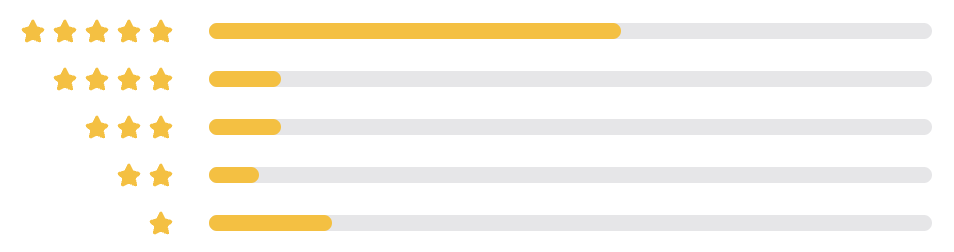
Polarized “J-shaped” curve of reviews
> **Even honest reviews are often inaccurate, because only the loudest voices speak.**
People usually leave reviews when they are either **delighted** or **furious**.\
The vast majority of normal, balanced experiences are rarely shared.
Common forms of bias include,
* Reviews written only after very good or very bad experiences
* Emotional reactions instead of factual insights
* Personal preferences misrepresented as objective truth
* Revenge reviews after isolated incidents
* Friends or employees posting overly positive feedback
These patterns hide the real average experience.
### ⚡ What this creates:
* A distorted view of reality
* A **polarized “J-shaped” curve** of reviews
* Far too many 5-star and 1-star ratings and almost nothing in between
> Platforms don't fix this. In fact, they profit from it.\ **Drama drives clicks. Balance doesn’t.**
### 🛑 How platforms make it worse
Legacy systems often highlight
* Long reviews instead of helpful ones
* High activity users instead of real visitors
* Outdated content that no longer reflects reality
The result is a feed shaped more by loud voices than by accurate representation.
***
### 📚 Research confirms the distortion:
A 2018 Harvard Business Review study found that:
* The review economy is **heavily skewed by extreme opinions**
* Moderate voices often stay silent
* **Monetary incentives improve both quantity and quality** of reviews
> **The result? A digital world where every place is either “amazing” or “terrible” — but rarely accurate.**
***
### 💡 How WeRate Reduces Review Bias
WeRate tackles the silence of moderate voices through:
* ✅ **Incentives for every type of review**, not just extremes
* ✅ **Wisdom Points** for timely, balanced, and consistent contributions
* ✅ **Gamified competitions** that reward contribution, not controversy
* ✅ **Optional anonymity** for honest, pressure-free feedback
> Incentives don’t distort quality — they **uncover it.**